- The client’s problem
- The website took more than ten seconds to load on a phone, and there was no single, clear way to book a consultation.
- The solution
- We rebuilt the website on WordPress: we made it lighter, organised the services around clients’ problems and added booking with online payment, the documents needed for selling online and a cookie consent window. We continue to look after the website.
- What the client gained
- 100/100 in the Google Lighthouse test: desktop performance, accessibility and best practicesClients on a phone see the services quickly and book a consultation themselves, and the website does not track them without consent.
Before and after
| Aspect | Before | After |
|---|---|---|
| First screen on a phone | about 15 s | about 2.8 s |
| Home page size | 11.2 MB | about 0.6 MB |
| Lighthouse performance score on a phone | Home page 55, blog 56, BMR calculator 57 | Home page 96, blog 92, BMR calculator 100 |
| Booking a consultation | Buttons on different pages led to different places | One path: type of meeting, day and time, payment on the website and an e-mail confirmation |
| Privacy | No consent window; Google and Meta tools started straight away | Before consent the website connects to no third-party server and sets no cookies |
| Visibility in Google | 70 addresses submitted to Google, 52 of them of no value to clients; services without their own pages | 37 addresses with content for clients, with separate pages on topics such as insulin resistance, Hashimoto’s and PCOS |
Google PageSpeed Insights (Lighthouse) measurements in mobile mode: the old website on 20 October 2026, the new one on 7 November 2026; the home page, the blog and the BMR calculator. The first screen is the time until the home page’s main content appears; Google rates up to 2.5 s as good.
What we did
Sales documents and cookie consent
We prepared the terms of cooperation, the privacy policy, information on withdrawing from the contract, the seller’s details and an accessibility statement. In the consent window refusing is as easy as accepting, and statistics, ad measurement and Instagram posts switch on only after consent.
Result: Dominik sells his services online with a complete set of documents, and visitors decide for themselves what the website may collect about them.
Better security
We removed add-ons the website did not need, closed off access to files and information that could make a break-in easier, and set up protections that the browser applies on every visit.
Result: The website and client data are better protected.
Looking after the website
We look after the website on an ongoing basis: we update the services and other content, add pages, keep the software up to date and check every page before changes are published.
Result: Dominik can focus on his clients while the website stays up to date.
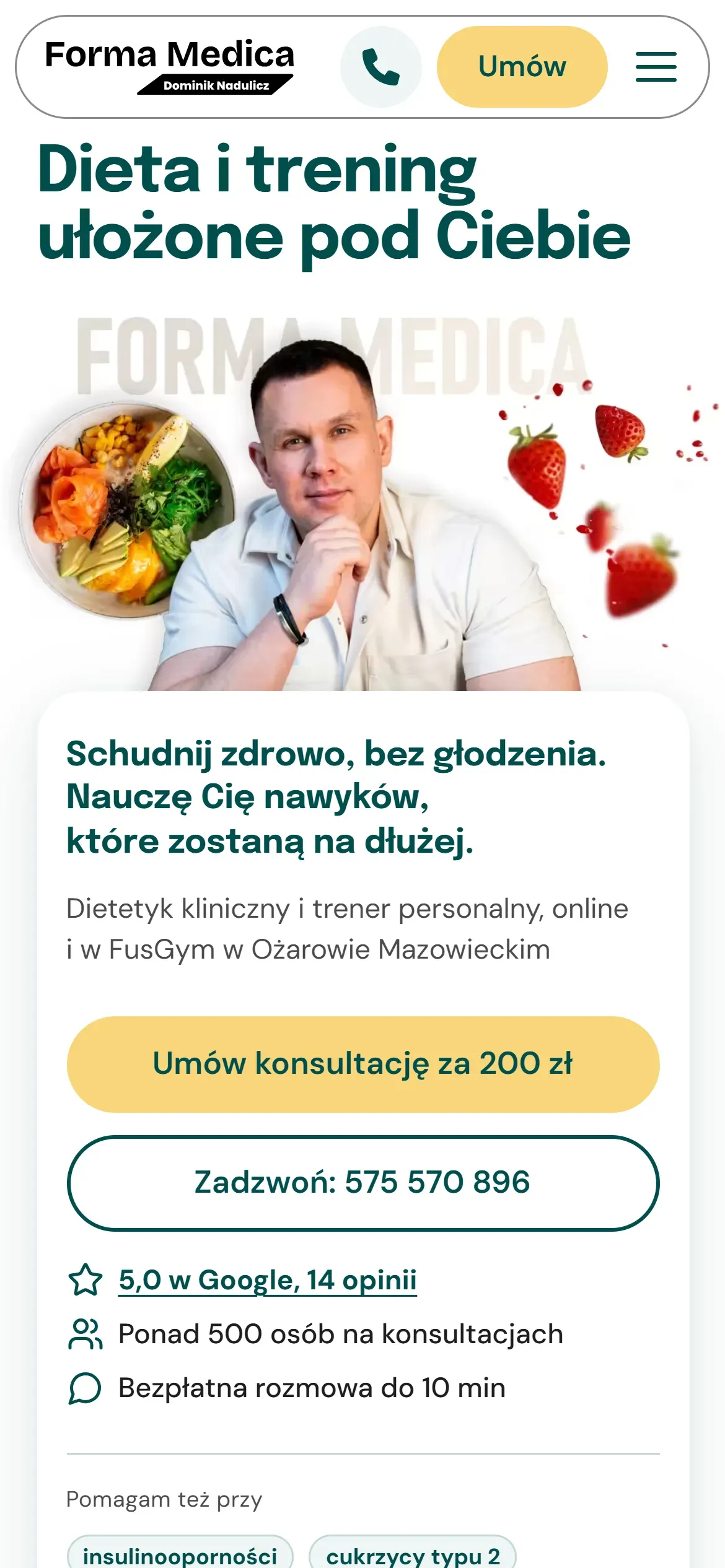
Fast on a phone
We compressed the images, removed unnecessary scripts and add-ons, and each page now loads only the styles it needs. The home page weighs about 0.6 MB instead of 11.2 MB.
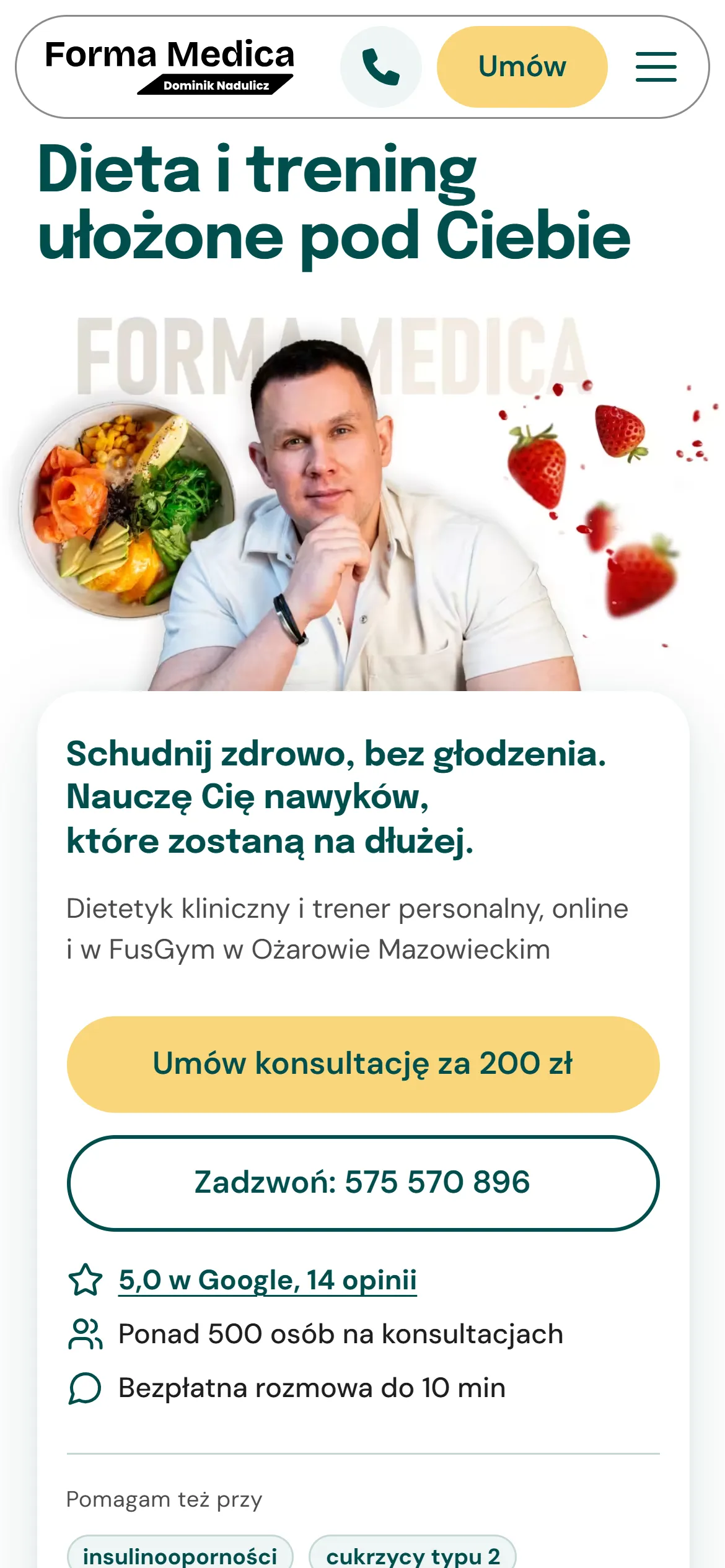
Result: Clients on a phone see straight away what Dominik does, the button to book a consultation and the phone number.
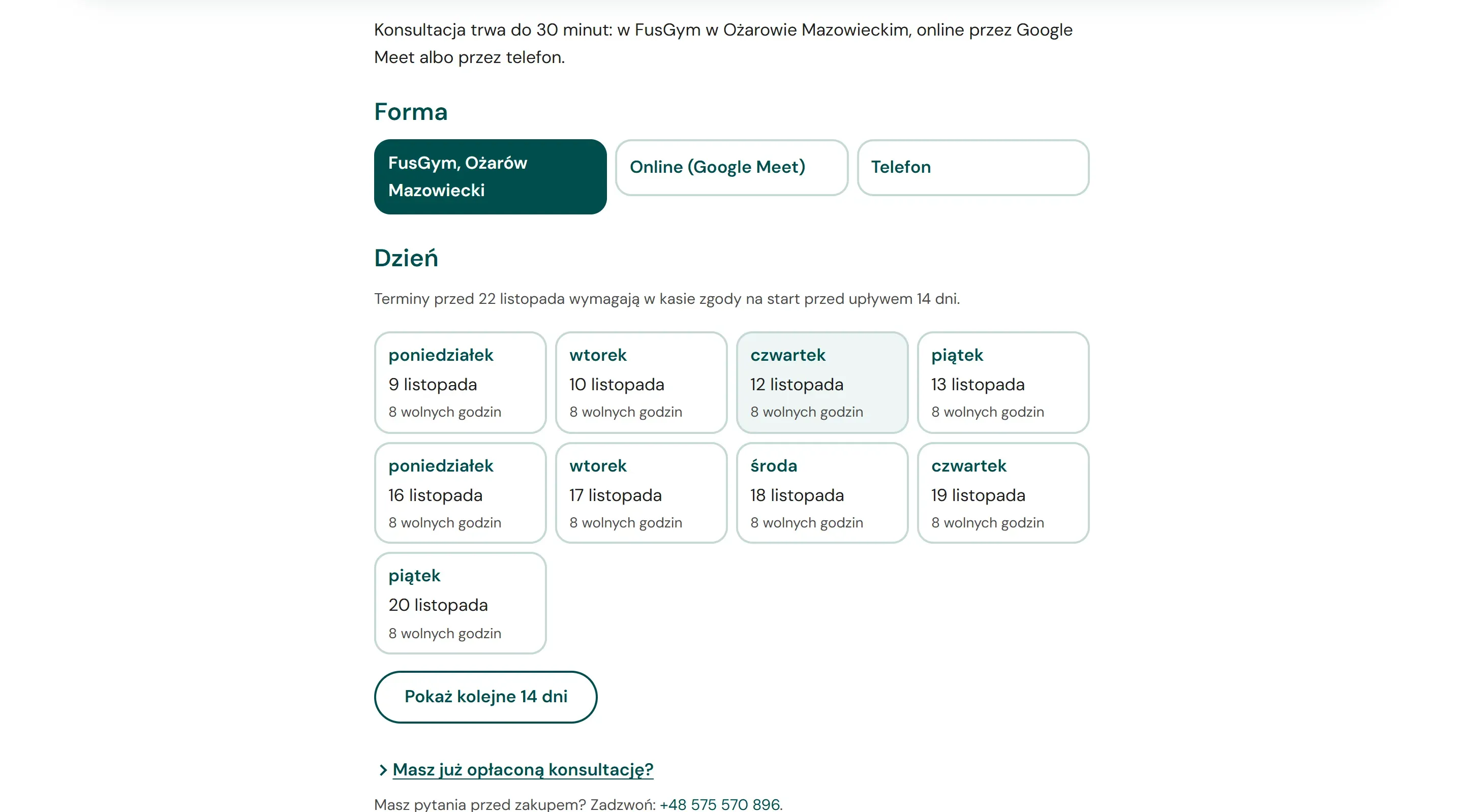
Booking and payment on the website
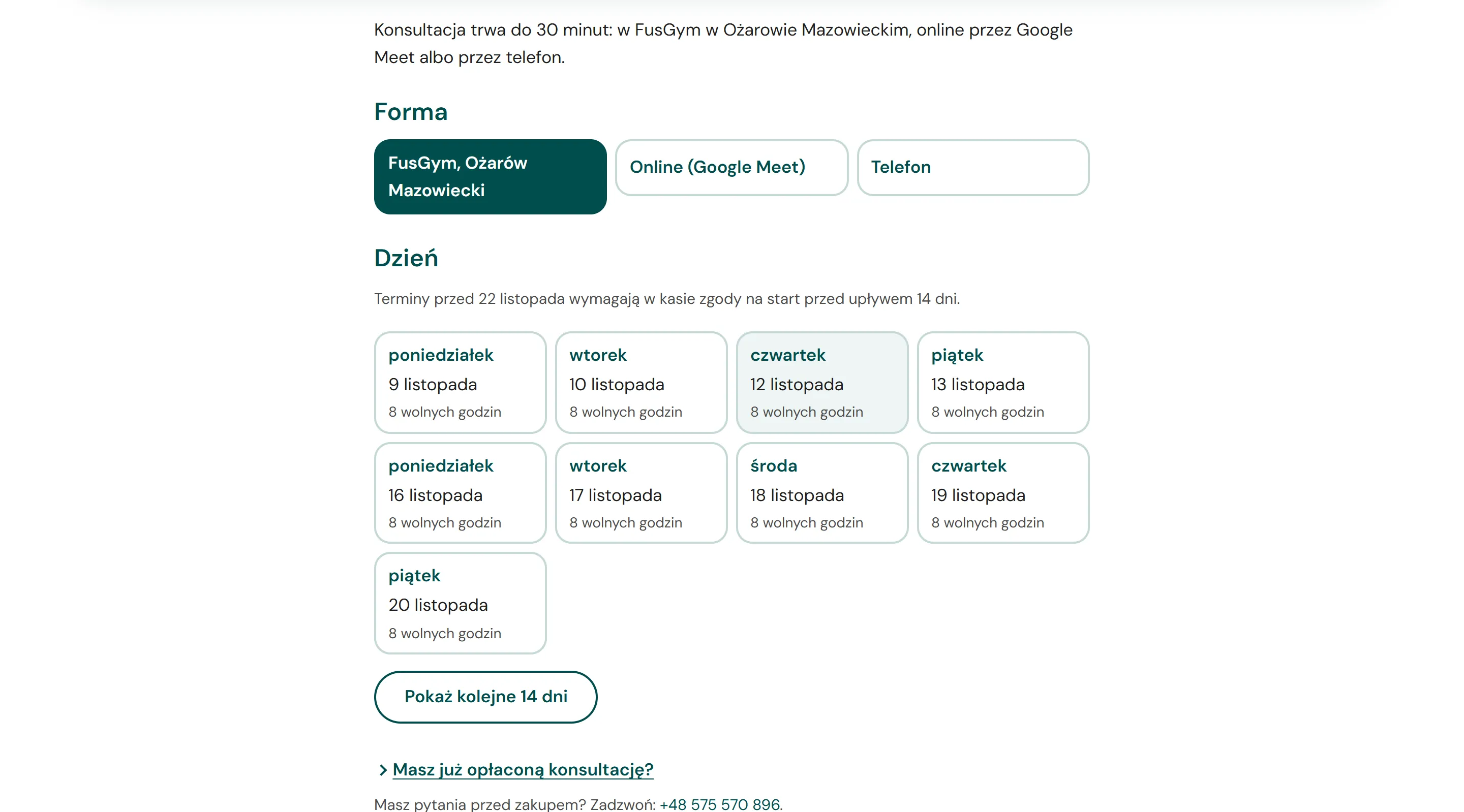
The client chooses how to meet (FusGym, Google Meet or phone), a day and a time, and only then pays. They receive a confirmation with a calendar file and a link to a questionnaire by e-mail, and can change the appointment from a link in that e-mail up to a day before. Those who prefer to talk leave their number in a short form.
Result: Clients book a consultation at any time of day, without calling or waiting for a reply.
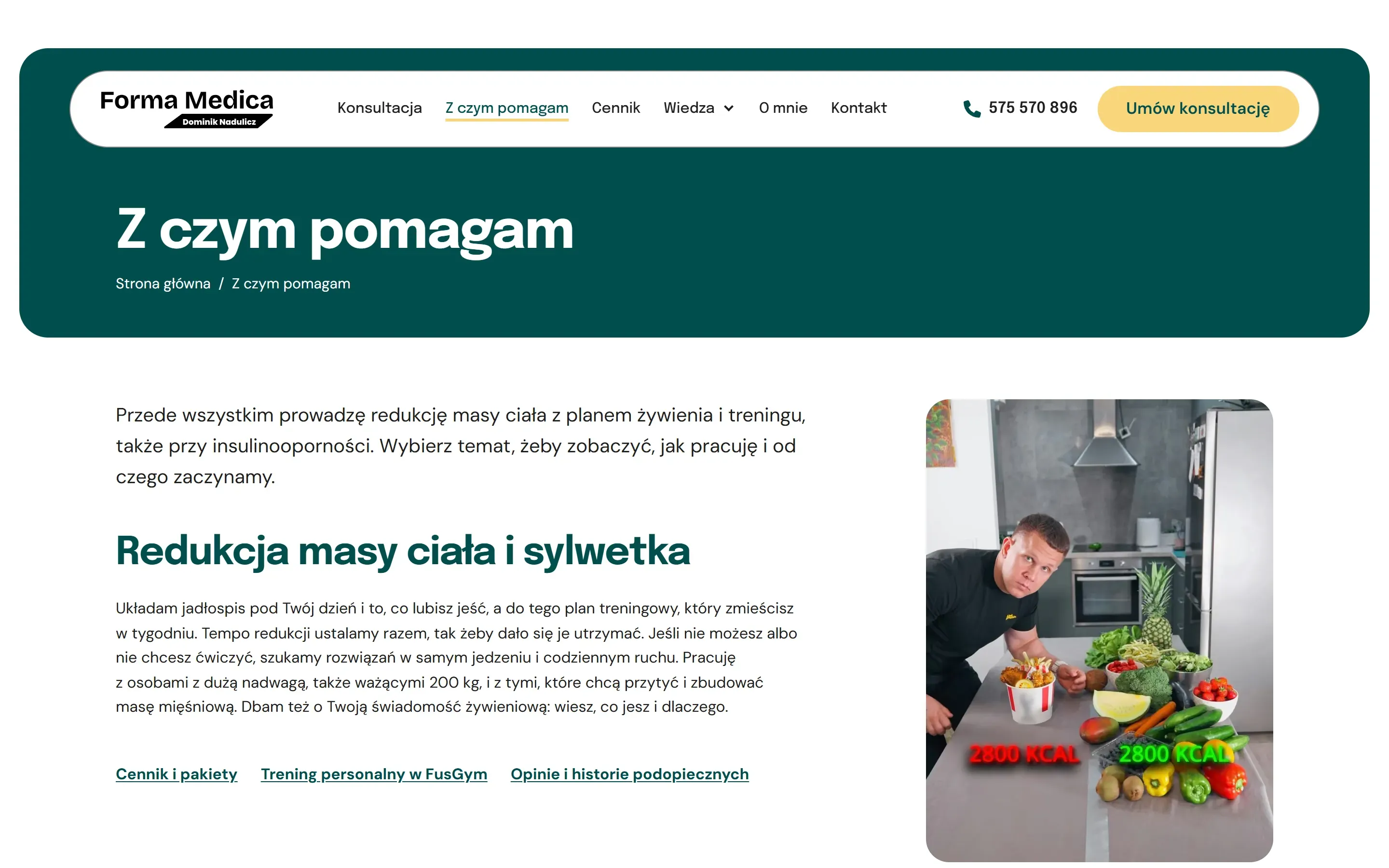
Services organised around clients’ problems
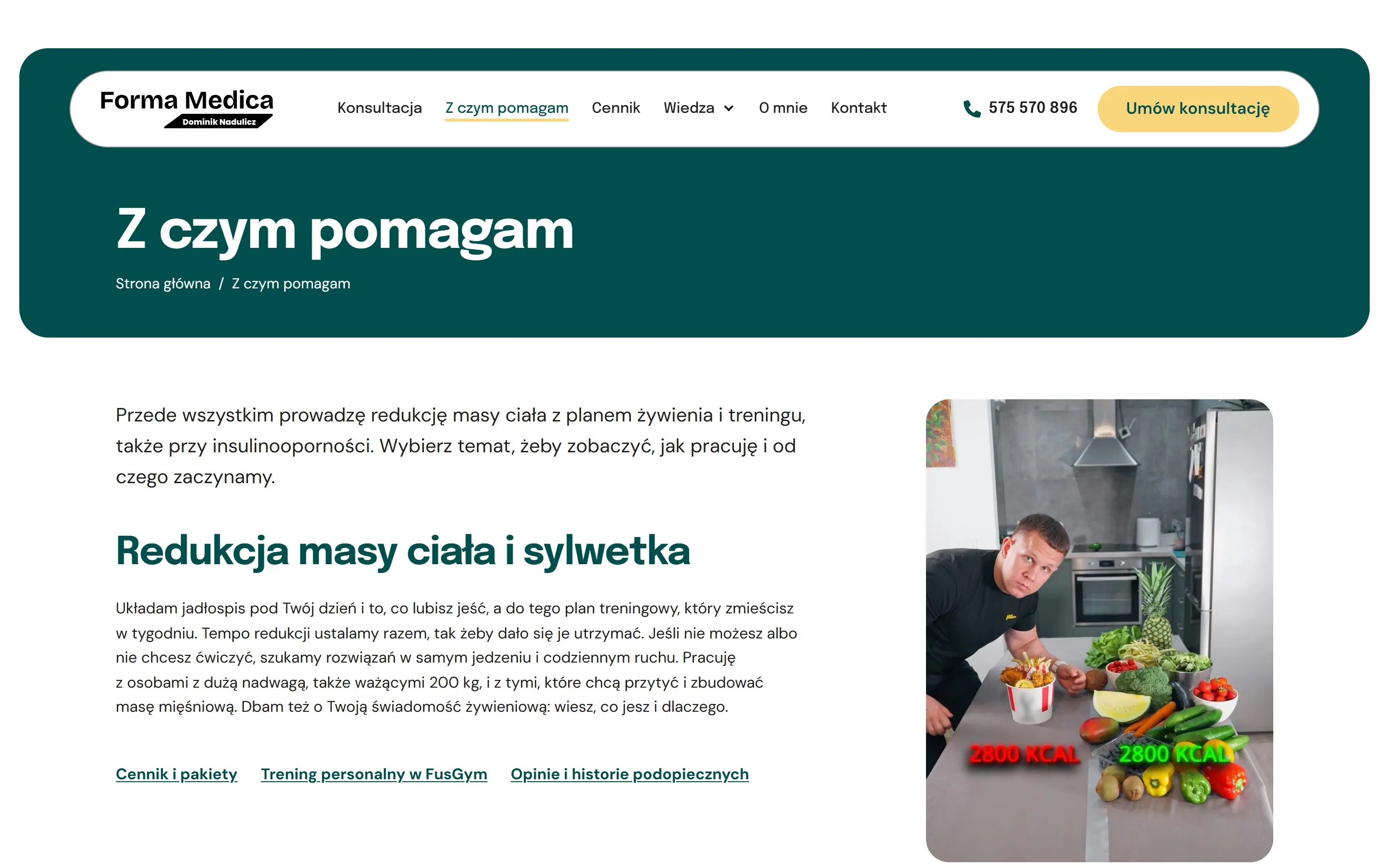
Weight loss, insulin resistance, type 2 diabetes, Hashimoto’s, PCOS, IBS, pregnancy, children and teenagers, and runners and cyclists each have their own page describing how the work goes. Every page has its own title and description for Google, and the practice’s details are also written in a format that search engines and AI assistants can read.
Result: Someone with a specific problem lands on the page about it, including from a search engine.
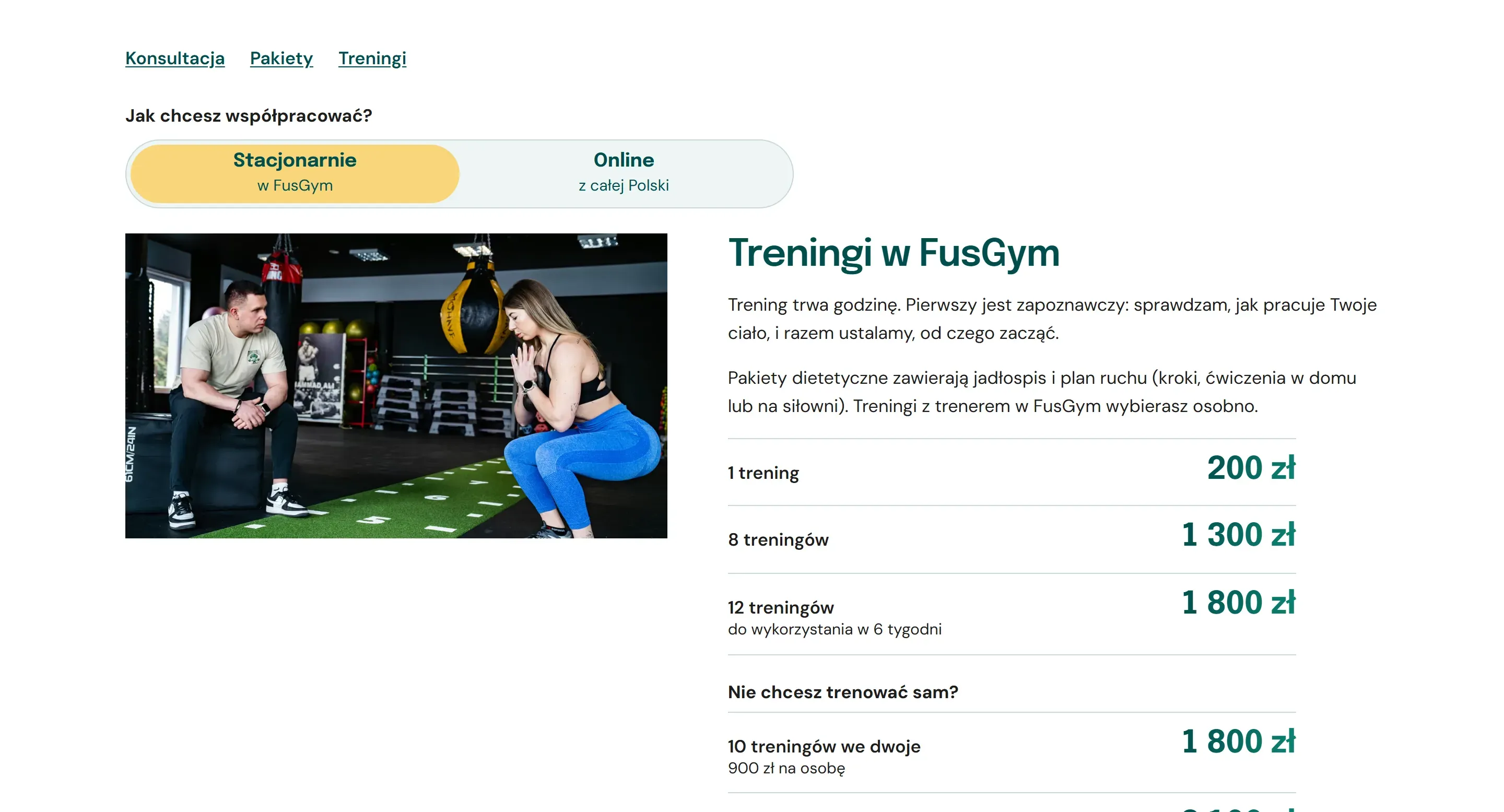
Prices in one place
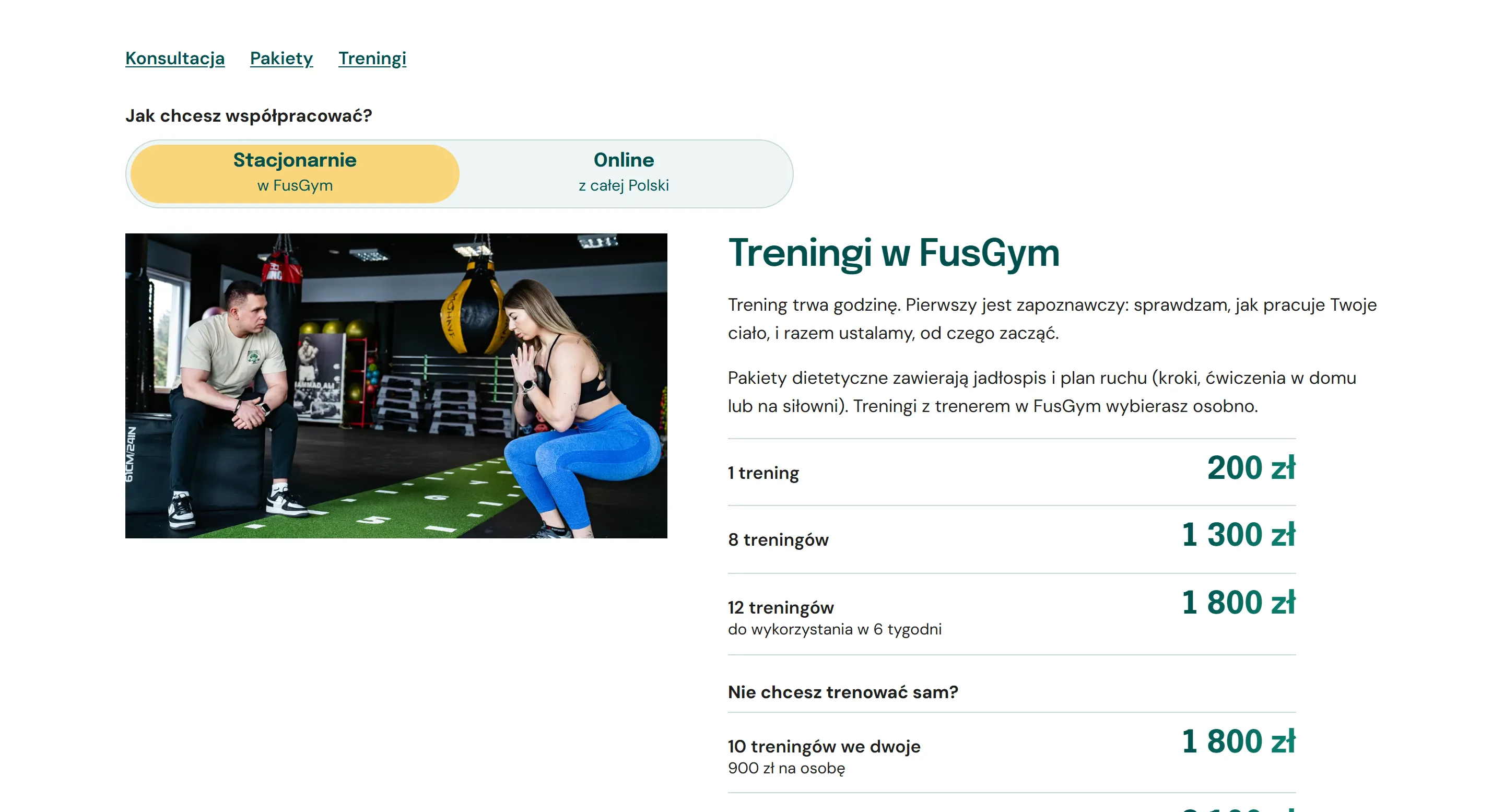
The consultation, coaching packages for 1, 3, 6 and 12 months and training sessions at FusGym are on one page, with a switch between in-person and online cooperation.
Result: Before the first conversation, clients know what they will pay and what the package includes.
Technology
The website runs on WordPress, with WooCommerce handling bookings and payments. Dominik edits the content himself in the familiar WordPress dashboard.
- WordPress
- WooCommerce
- Online booking
- Consent Mode v2
- Structured data
- llms.txt
Facing a similar problem?
- Does your website take a long time to load on a phone?
- Can clients only book with you by phone or message?
- Do you sell services online and are unsure whether your terms and privacy policy are complete?
- Does your website start Google and Meta tools before the visitor gives consent?
- Do clients with a specific problem fail to find information for them on your website?
The initial consultation and quote are free.
Describe your problemFrequently asked questions
How can clients book appointments themselves on a website?
The most convenient way is booking built into the website: the client chooses the type of meeting, a day and a time, pays and receives an e-mail confirmation. This is how consultation booking works on formamedica.pl, and the appointment can be changed from a link in the e-mail up to a day before.
Can a website take payments for services?
Yes. A WordPress shop (WooCommerce) handles online payments, and selling online requires terms and conditions, a privacy policy, information on withdrawing from the contract and the seller’s details. On formamedica.pl the client pays for a consultation after choosing a time.
Why is a WordPress website slow on a phone?
Usually because of large images, a page builder with many add-ons and third-party scripts. The old formamedica.pl website weighed 11.2 MB and its main content appeared on a phone after about 15 seconds. After the rebuild it weighs about 0.6 MB and shows its main content in about 2.8 seconds.
Does a website have to ask for cookie consent?
Yes, if it uses tools that set cookies or pass data to other companies, such as statistics or ad measurement. Refusing should be as easy as accepting. Before a visitor decides, formamedica.pl connects to no third-party server and sets no cookies.
Who looks after a website after a rebuild?
Usually the web developer the company hires to look after it: they update content, add pages, keep the software up to date and make sure booking and payments keep working. KCD Studio looks after formamedica.pl.
How much does it cost to rebuild a website with appointment booking?
A simple website costs from PLN 900. Websites with booking, payments and a rebuild of existing content are quoted individually. An initial quote is free, usually within 48 hours. See details